Bringing clarity to cloud data security
Laminar's DSPM helps security teams govern sensitive data across cloud environments. This case focuses on the main DSPM overview: the dashboard where users assess data-security posture, prioritize violations, and decide what needs action.
I led the redesign across research, information architecture, dashboard UX, prototyping, iconography, and design-system work. The core problem was signal overload: teams had the data, but struggled to see risk and urgency. The key move was replacing a flat posture view with risk-category grouping, inline filters, and severity-first scanning.
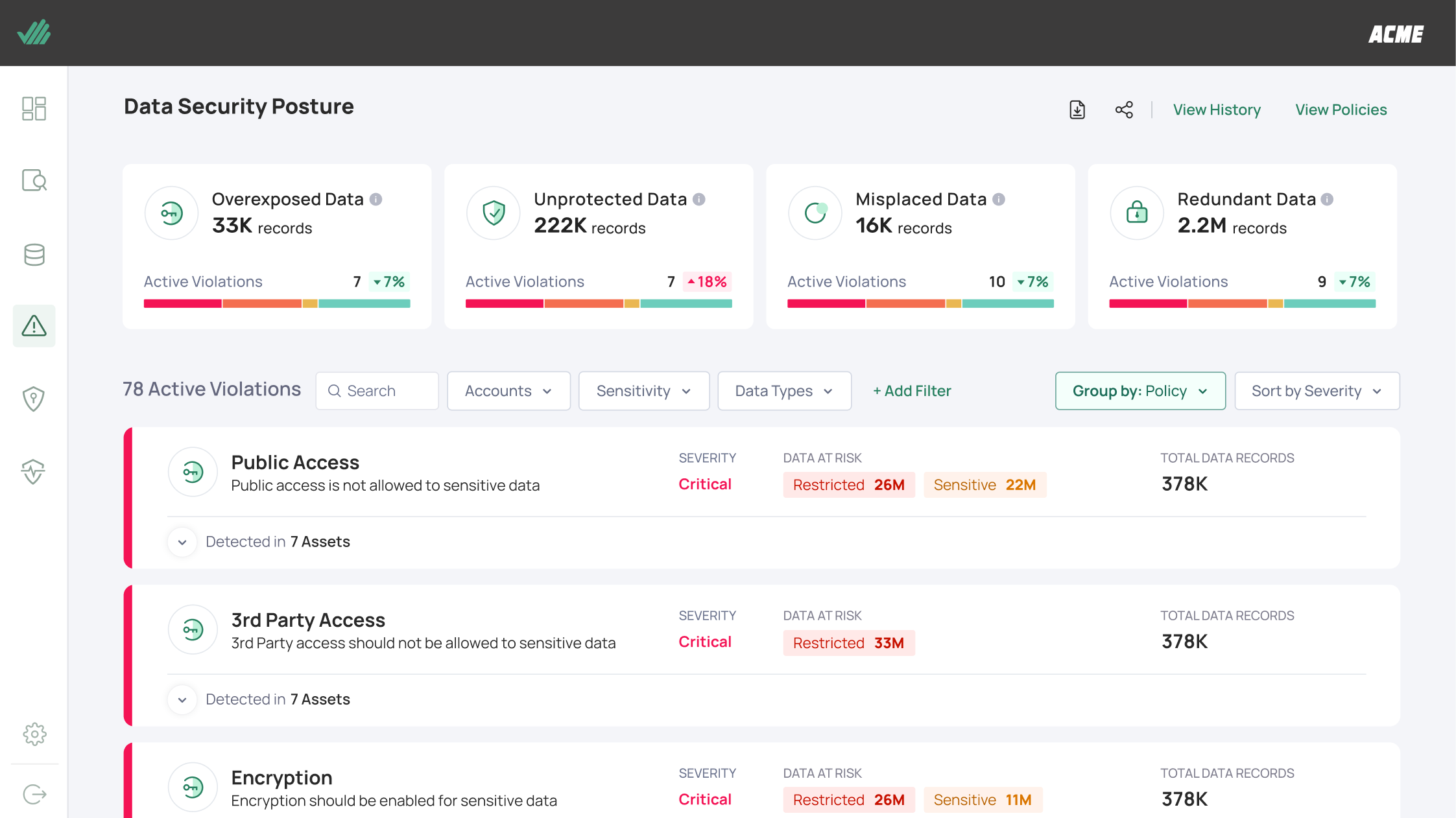
Research, information architecture, dashboard UX, prototyping, iconography, design-system work and final UI.
Figma
Miro
Maze
Adobe Suite
Jira & Confluence
GitHub
Product Design Lead
Product Manager
Technical UX Writer
4 Full-stack Developers
The problem
Analyzing sensitive assets in cloud environments requires giving users visibility into the lifecycle and posture of those assets. Across the existing product, that visibility was fragmented and hard to act on.
For a data security product, clarity is the product. If users can't quickly see which assets are exposed and why, the tool fails at its core job, so reducing noise and surfacing priorities was essential to the product's value, not just its look.
- Users lacked a clear understanding of why assets were marked as sensitive, and needed more diagnostic context.
- Finding security incidents or sensitive content required navigating multiple views and was time-consuming.
- Dashboards were overloaded with data, making it hard to identify priorities and grasp broader insights.
The challenges
The core challenge was turning large volumes of complex security data into something clear, fast to scan, and aligned with how security teams actually work.
The challenges
- Identifying the most significant risks and assets
- Presenting large volumes of information clearly
- Delivering meaningful insights quickly and efficiently
Trade-offs
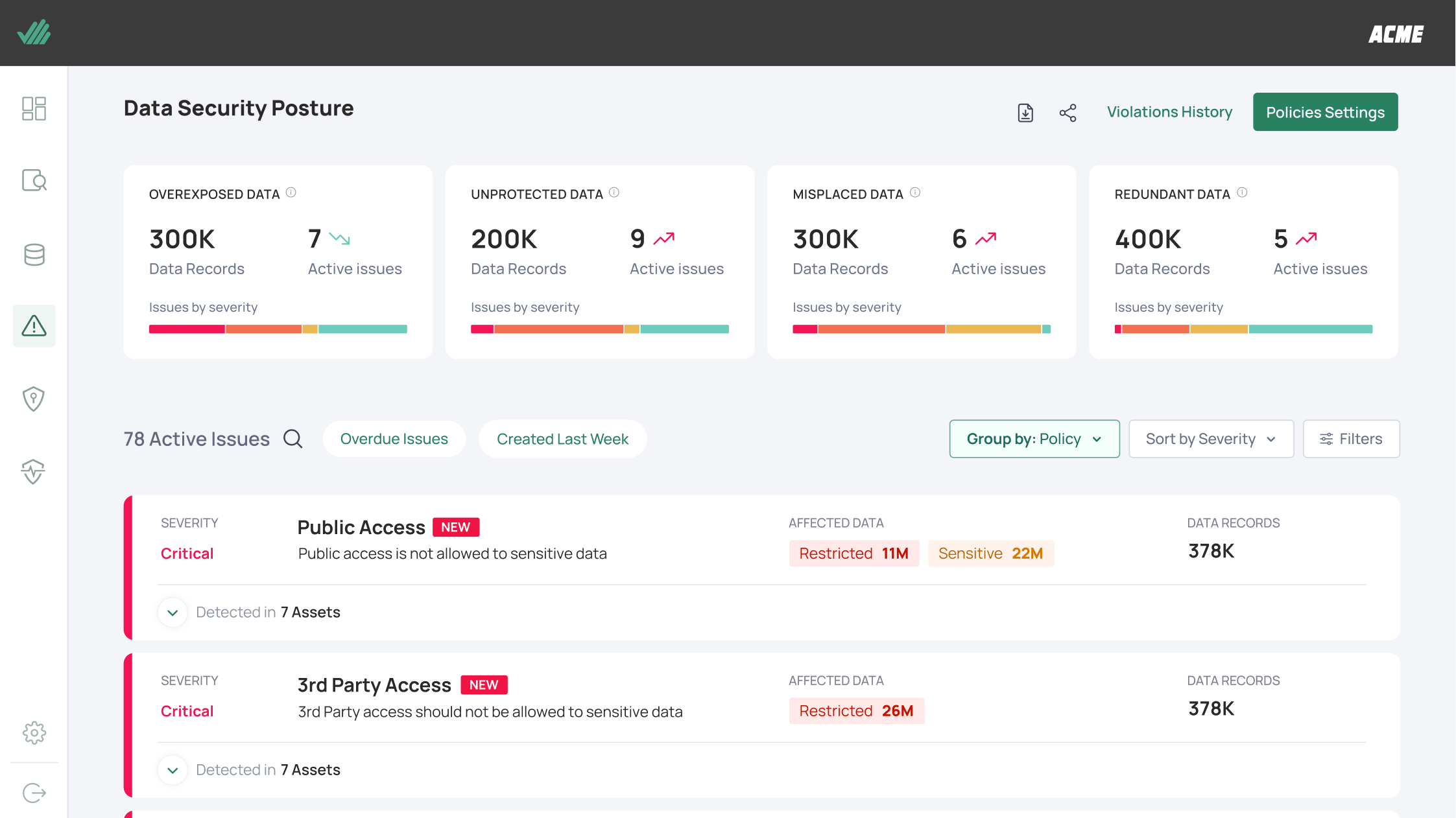
- Chose inline filters over hidden menus, busier on first load, but users can start filtering without knowing what to look for
- Replaced trend line graphs with severity bars, less visual richness, but answers "what do I act on now?"
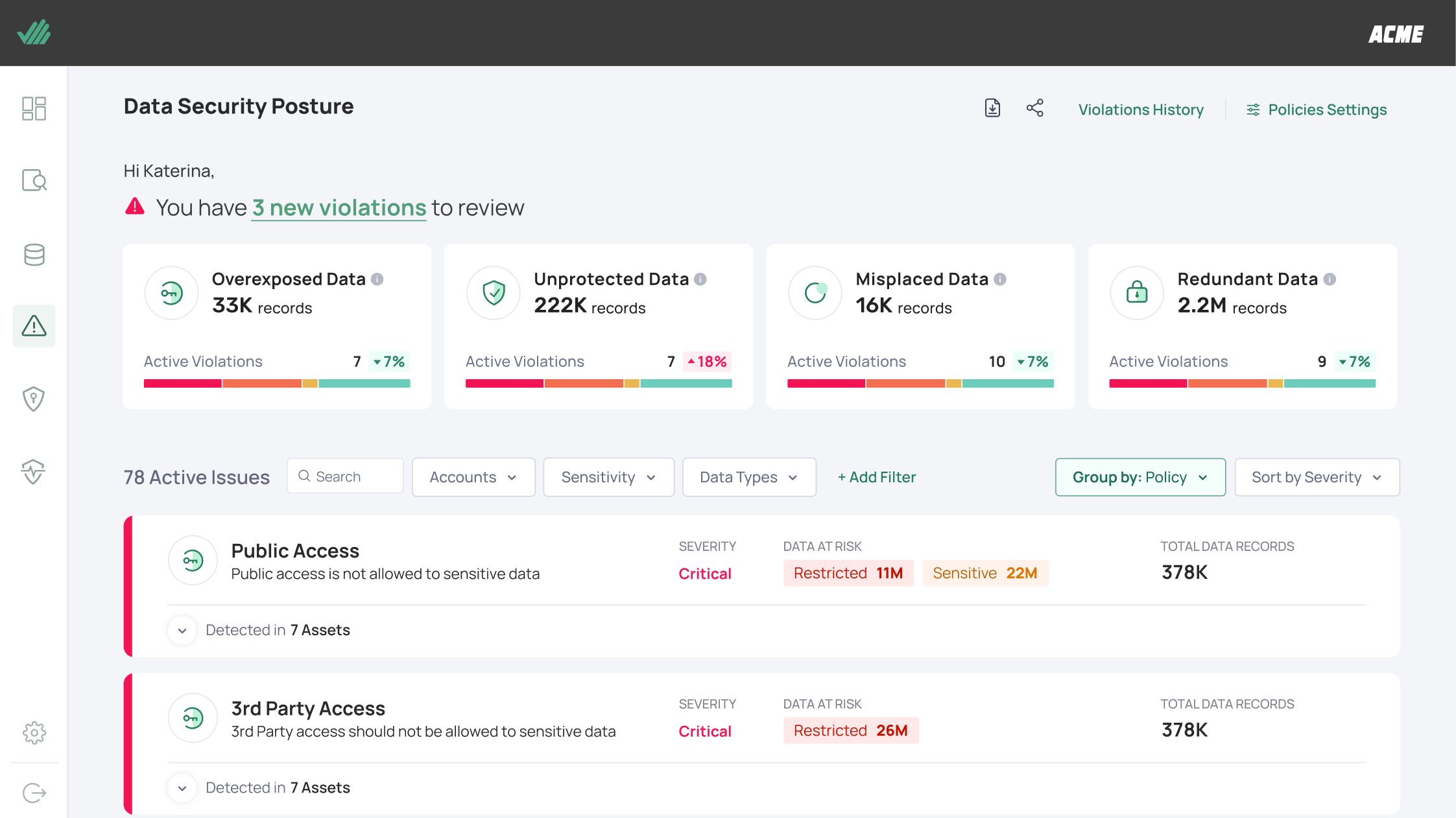
- Removed opening text notification, it added context but competed with the dashboard's primary job
Research and user needs
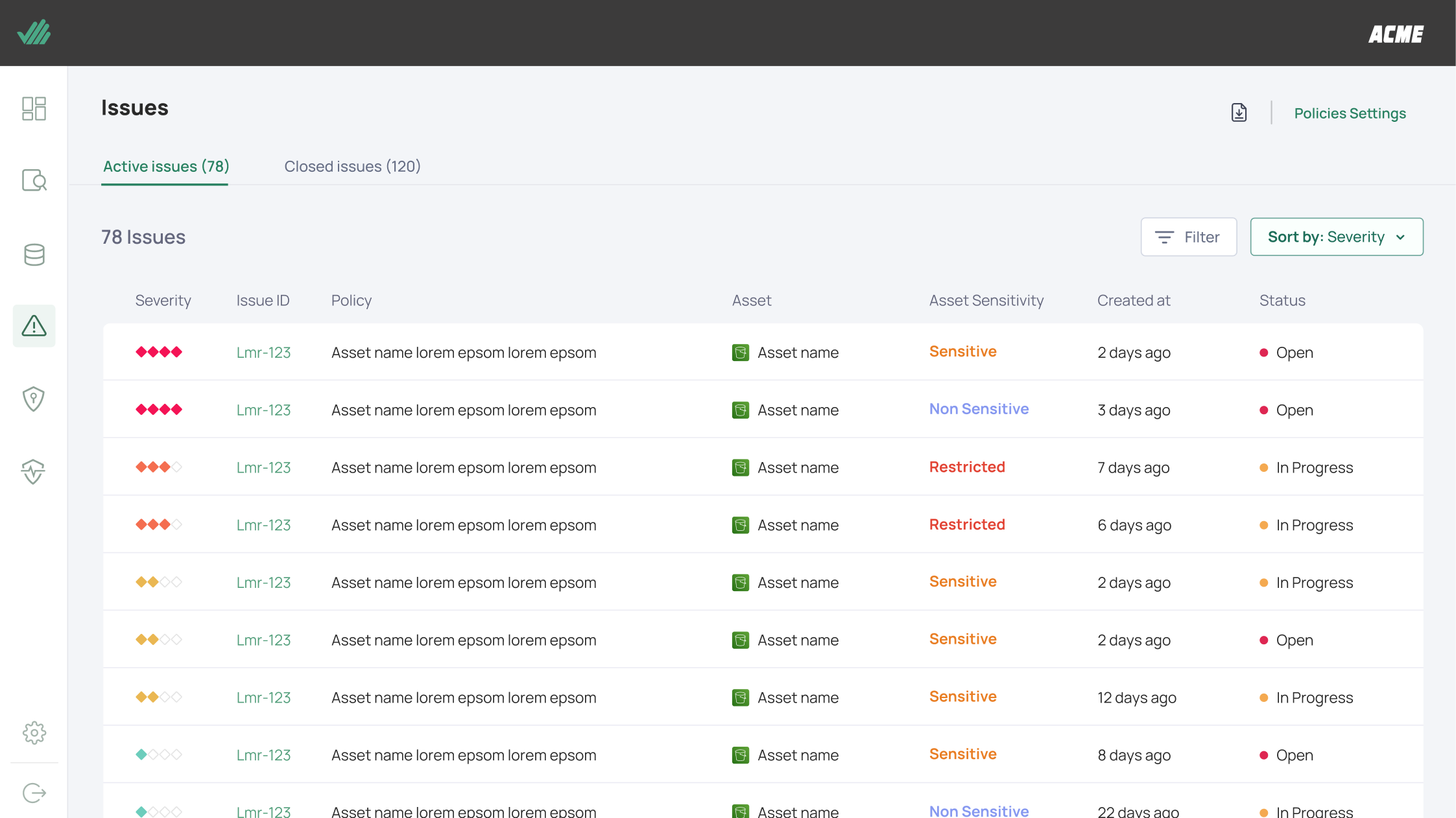
Research happened in two phases. First, through the Black Hat conference and design partners, I gathered early insights on how security teams use the DSPM overview. Then, through UserTesting, I ran sessions with 10 security engineers to test improvements before release: asking what they understood from the overview, how they read the charts, and whether grouping by policy made sense.
Exploring solutions
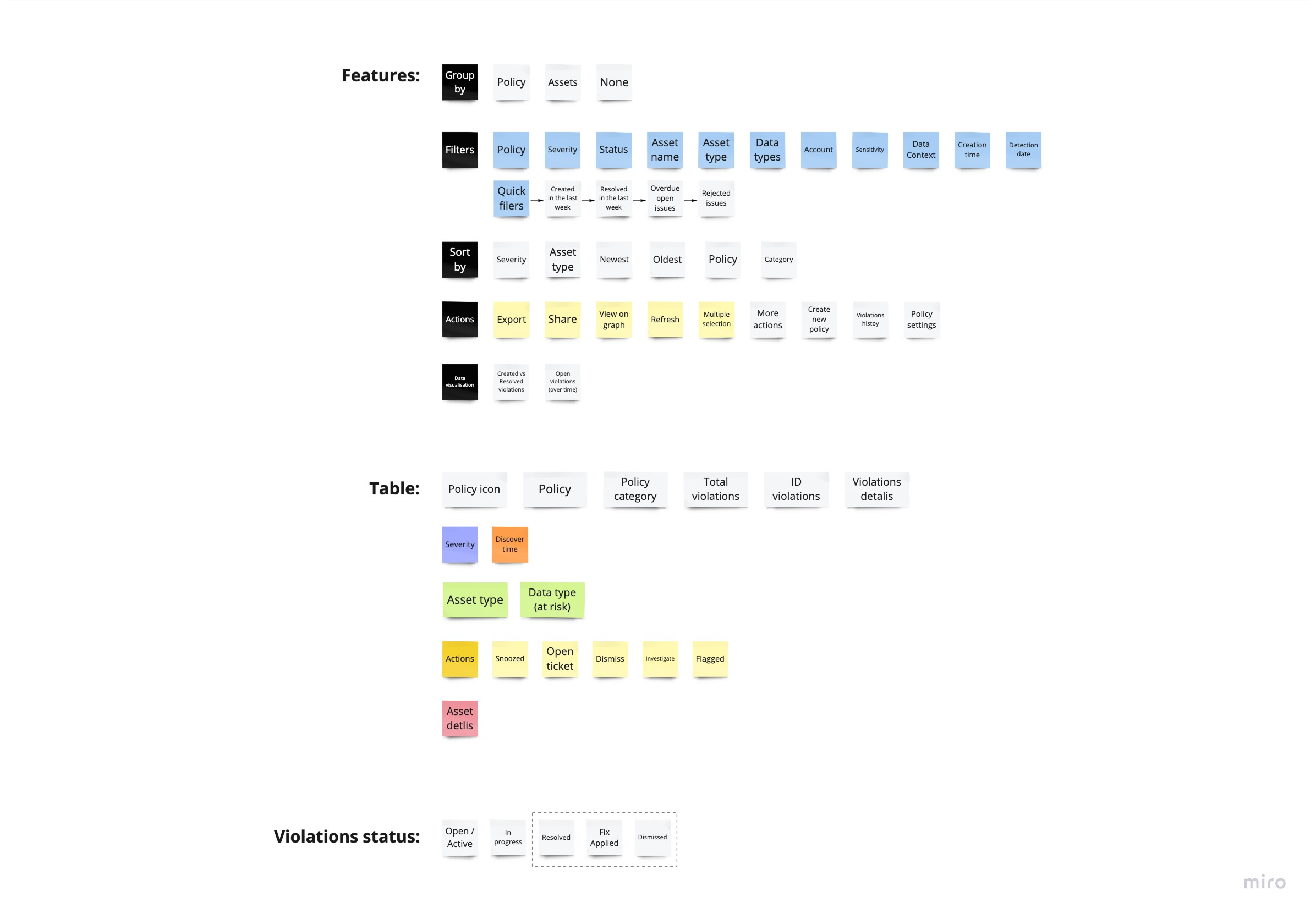
I explored three directions for the main dashboard, each making a different bet on how to balance information density with speed to action. The key question was: how much should the system decide for the user upfront, versus giving them control to filter and explore?
The final design
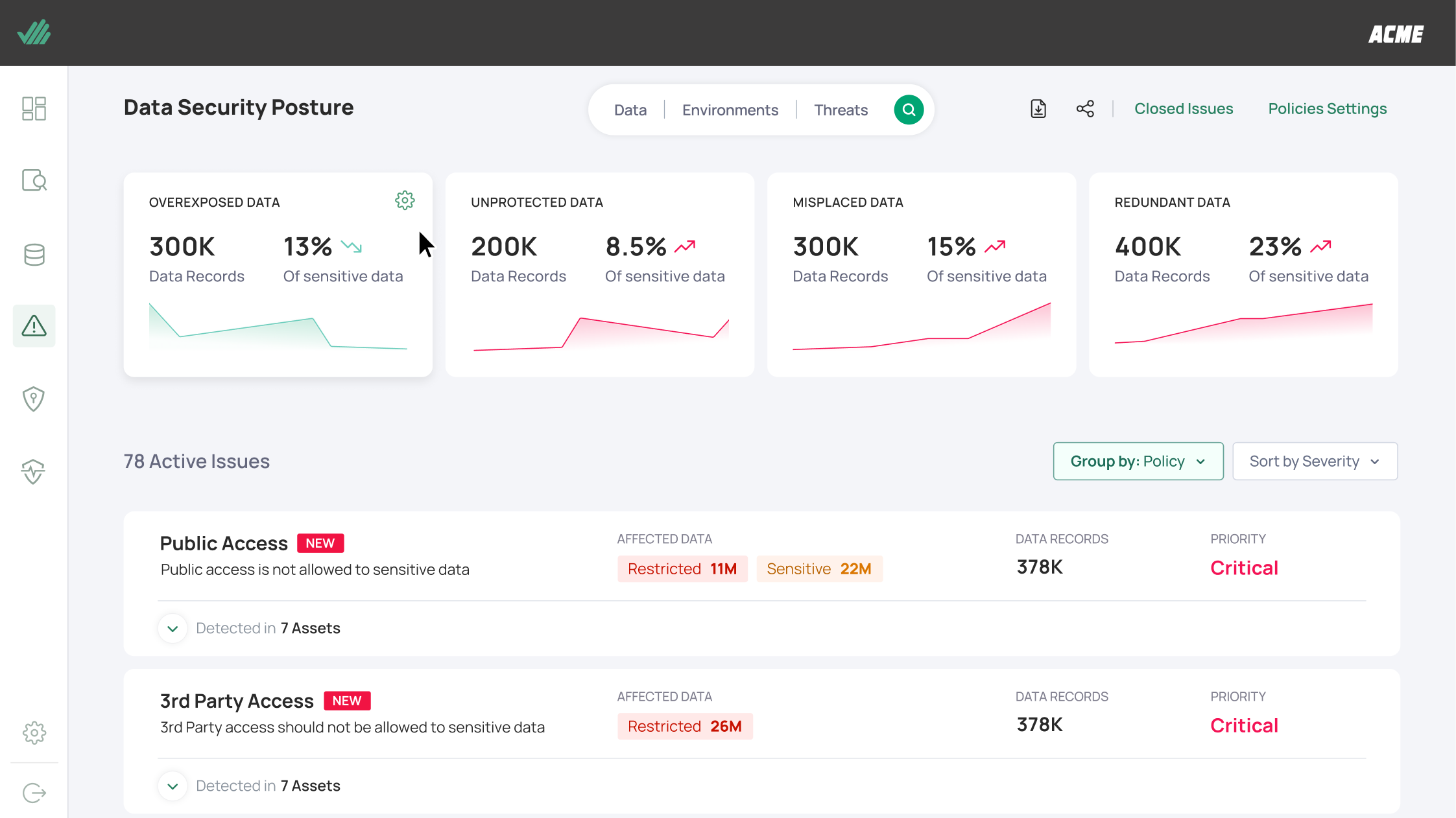
The final design organizes the full alert landscape into four data categories: Overexposed, Unprotected, Misplaced, and Redundant, giving users an immediate read on the type of risk before they drill down. Inline filters, severity bars, and grouped views replace the flat alert list, so the path from posture overview to a specific asset is direct and fast.
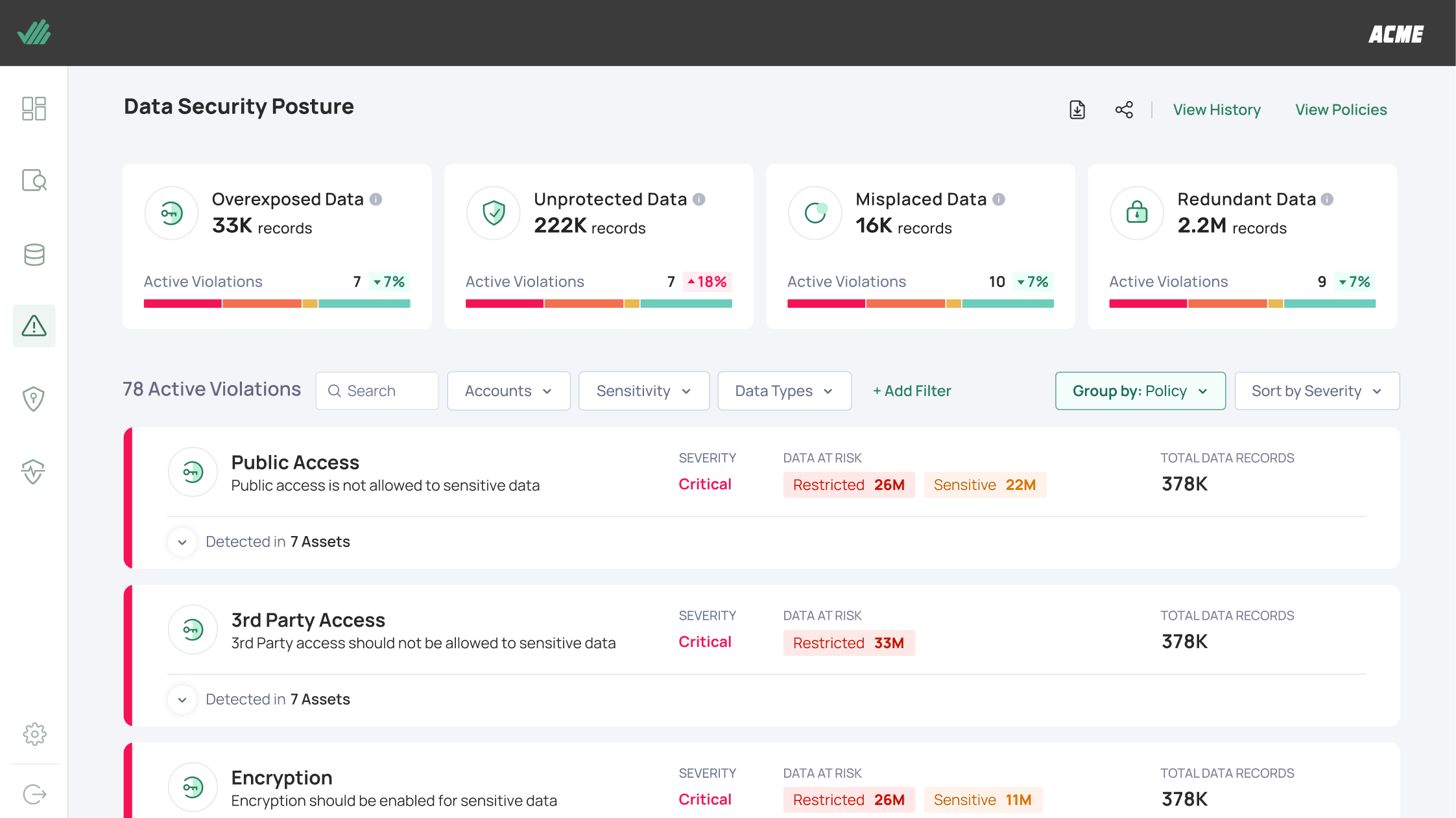
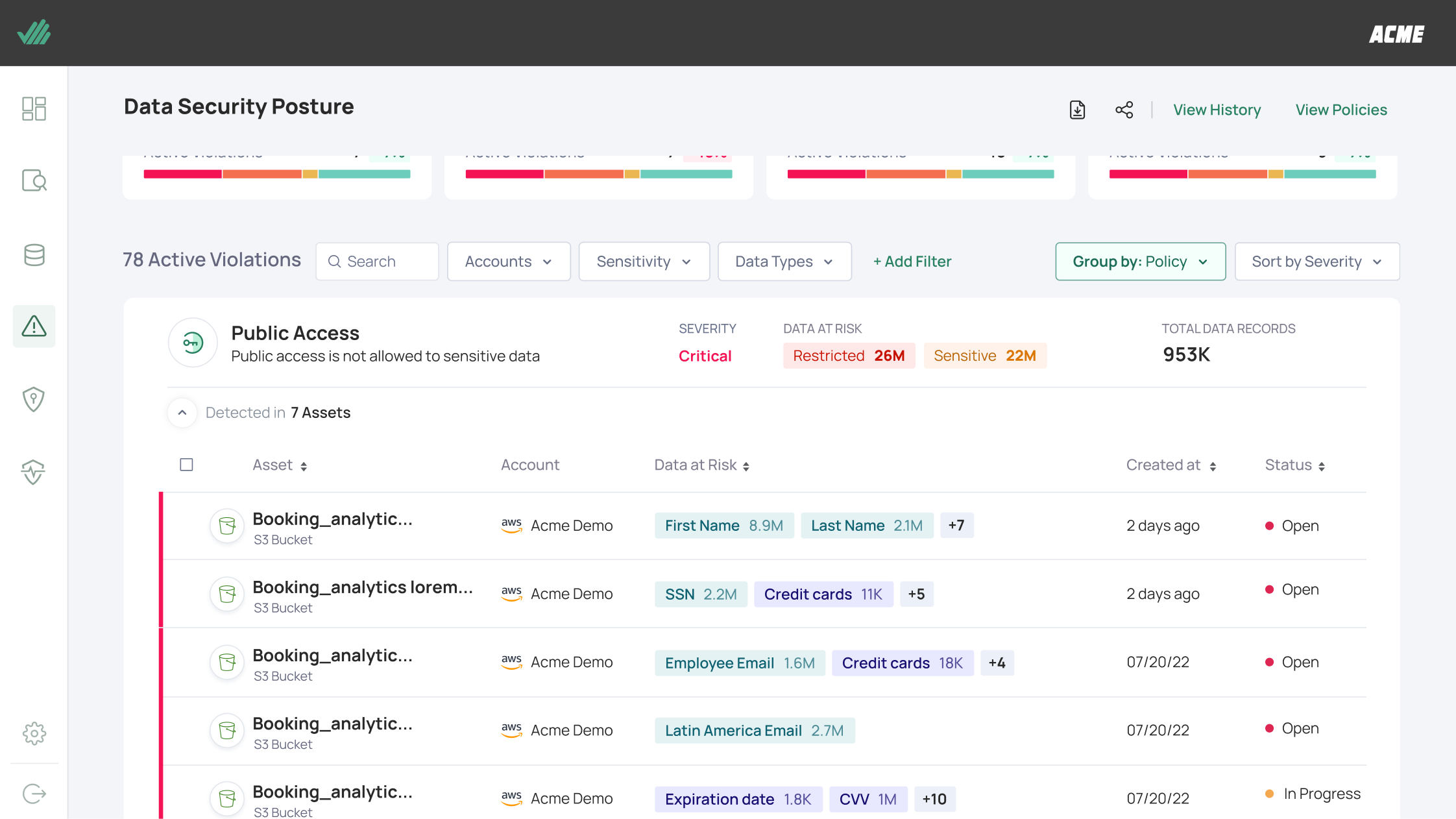
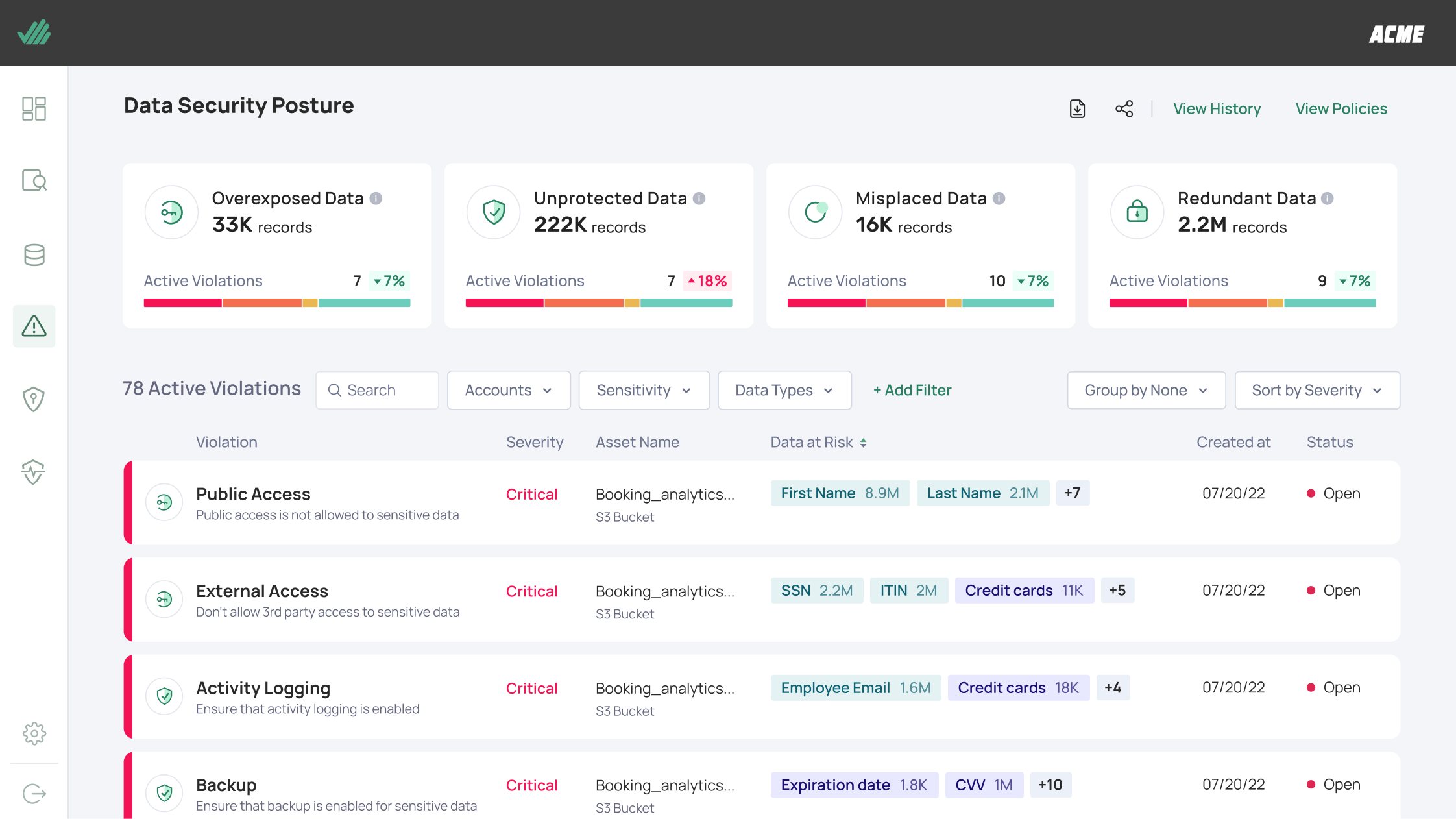
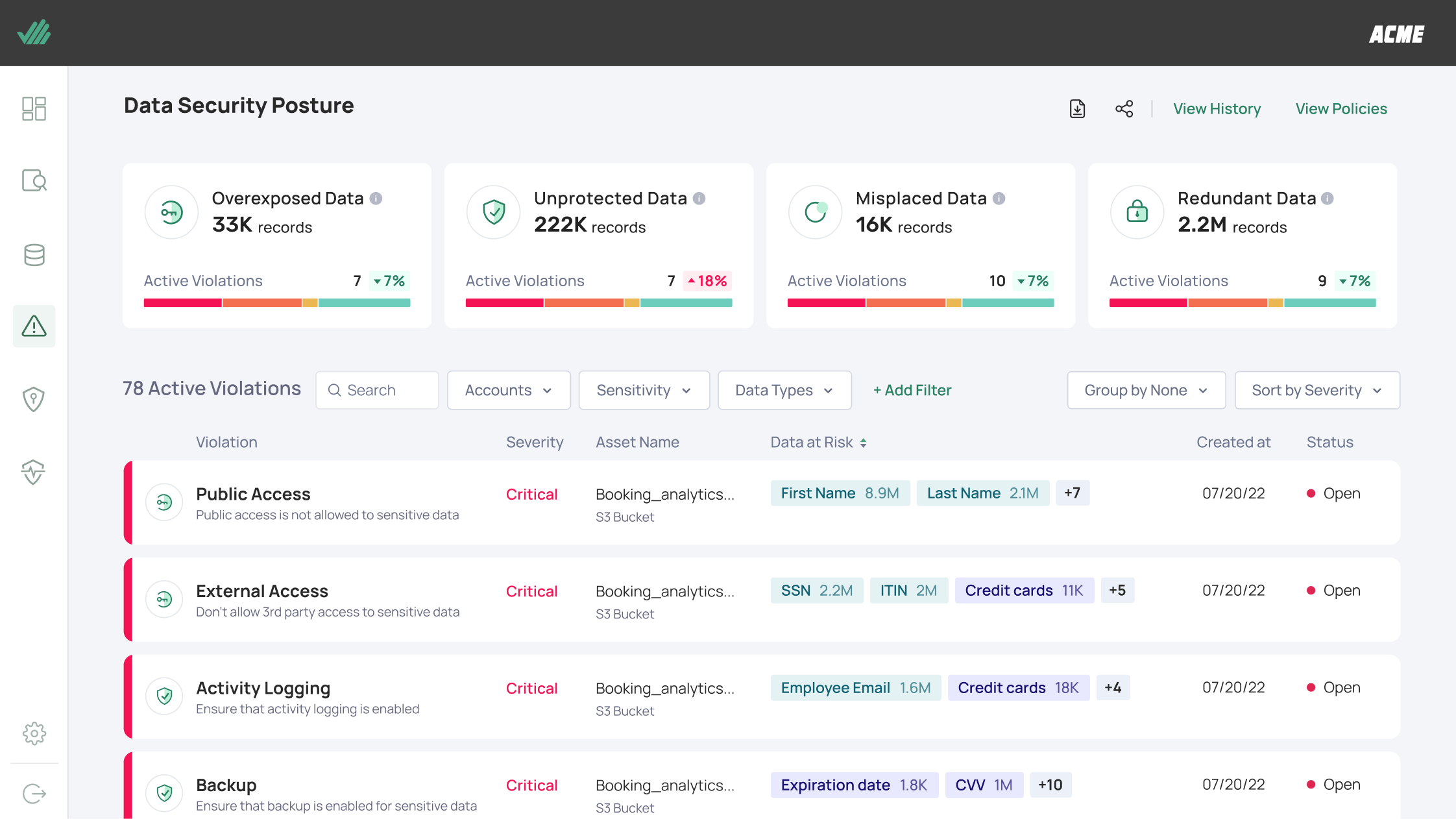
"Laminar does a great job of showing what we should do and where we are, what our problems are, and what we should work on, and all that information is in one central place." - NBA's security engineer
Design system
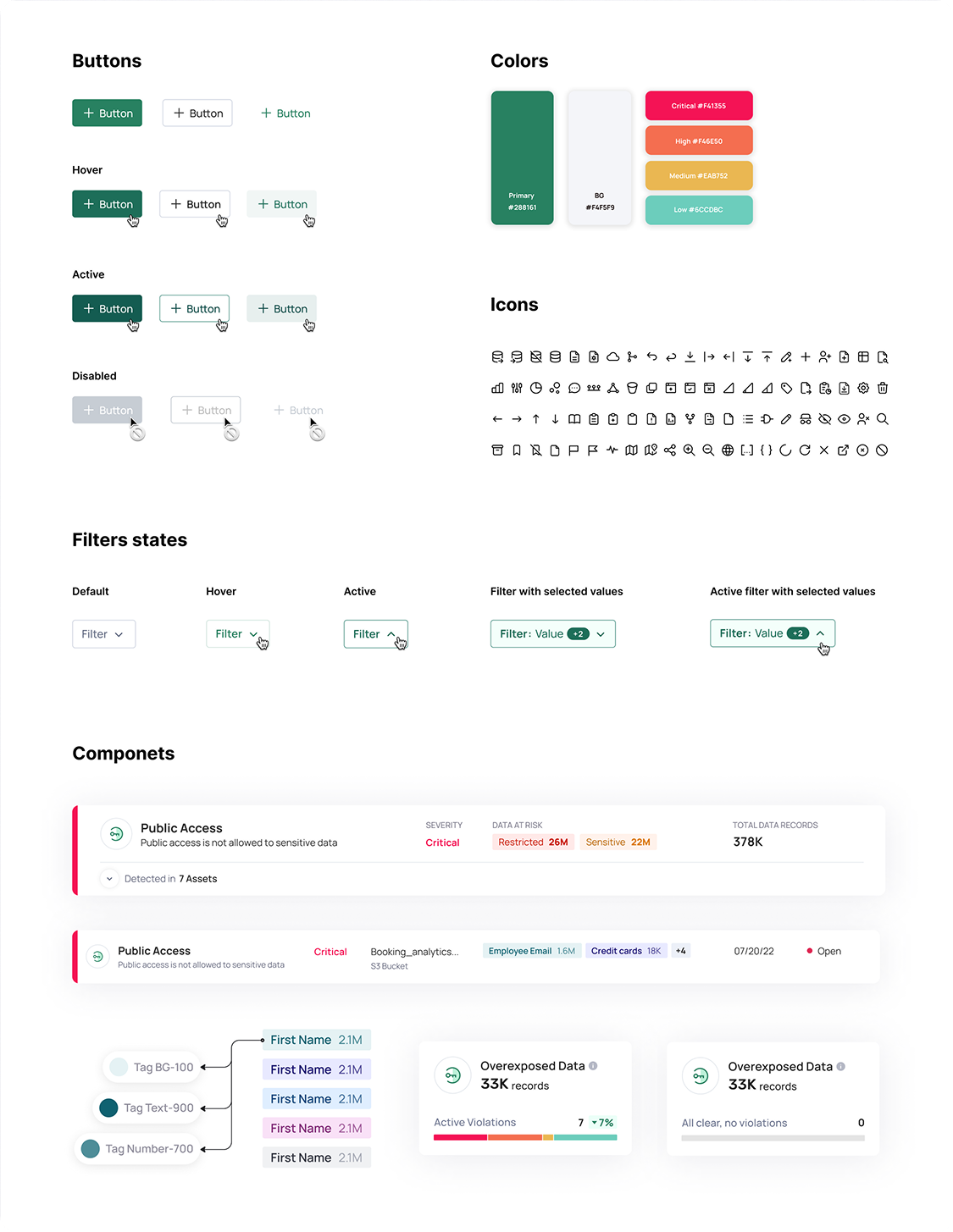
I built Laminar's design system on top of Ant Design v4, turning a generic enterprise library into a product language for cloud-security workflows.
The work focused on the patterns security teams touched every day: tables, filters, severity states, policy status, empty states, dashboards, icons and reusable data-visualization components.
The main challenge was balancing speed with ownership. We used Ant Design where it helped engineering move faster, but customized the moments that carried product meaning: severity, exposure, remediation, policy coverage and investigation states.
The result was a shared Laminar design language that made the DSPM redesign faster to build, easier to maintain, and more consistent across the product.
Results & Adoption
Laminar's DSPM launched in 2022; this redesign shipped in 2023 as part of the product's evolution.
The redesign shipped with a design system built on the Laminar Design Language: giving the team reusable components, consistent patterns, and a shared visual language that reduced design-dev friction going forward.
- +86% customer logins to Laminar's DSPM following the redesign
- +16% increase in users remediating violations through the product